A video game content rating has two parts: an age category (ESRB E, E10+, T, M or...
Video Game Age Ratings Explained for Parents
Every boxed game and most digital storefronts carry a rating from the ESRB in North America or PEGI in Europe, but the letters, numbers and small icons rarely explain themselves. This hub breaks down what each rating actually means, how the two systems differ, and which details matter when deciding if a game suits a particular child. It is written for parents and gift-buyers who want straight answers rather than marketing copy.
What you'll find here
ESRB ratings decoded
Clear explanations of E, E10+, T, M and AO, including what separates a Teen game from a Mature one in practice.
PEGI numbers and icons
How the 3, 7, 12, 16 and 18 labels work, and what the pictograms for violence, fear, bad language and gambling signal.
Content descriptors in plain language
What phrases like Fantasy Violence, Suggestive Themes, Users Interact and In-Game Purchases mean for the actual play experience.
Practical guidance for parents
Honest answers on online chat, loot boxes, co-op play with older siblings, and when a rating is stricter or looser than the game itself.

Batman: Arkham Knight is rated M for Mature 17+ by the ESRB and 18 by PEGI, making...
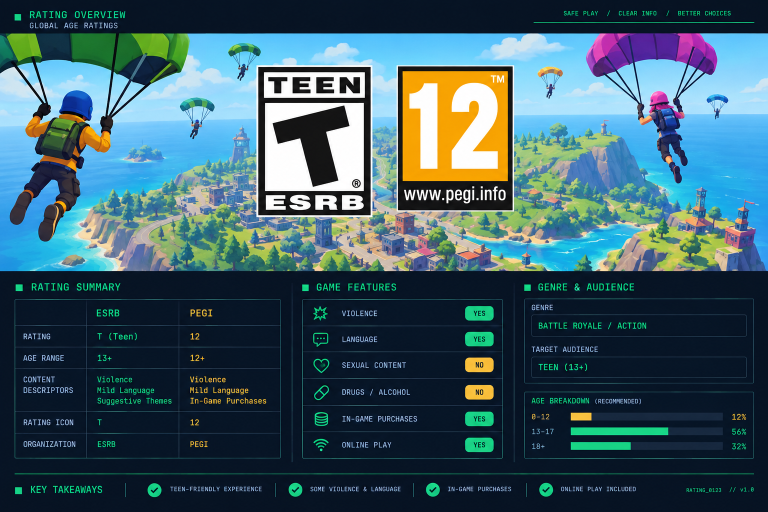
Fortnite is rated T for Teen (13 and older) by the ESRB in North America and PEGI...