Metadata Games exists to answer one small question at a time: how big is the download, when does it unlock, can my friend on PlayStation join me. Three people check those facts, and here is who does what.
Sam Whitaker
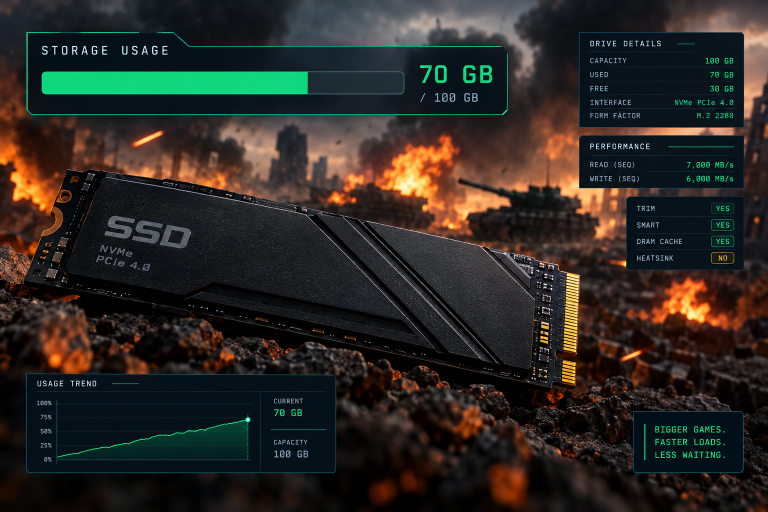
Sam Whitaker handles the hardware side of Metadata Games: minimum and recommended PC specs, performance targets, install sizes and how much storage a game eats after patches. Official spec sheets are the starting point, but Sam treats them as claims to be checked rather than settled facts, so a published 50 GB install gets compared against what the launcher reports after day-one updates. He also looks past the headline numbers. A recommended GPU means little without knowing which resolution, frame rate and settings preset the developer had in mind, so those details go in the entry whenever the publisher states them. Unconfirmed figures are flagged as such.
Priya Nair
Priya Nair covers the questions people ask in the week before a launch: when a game unlocks in their time zone, what it costs, what each edition includes and which subscription services carry it. Release timing is her particular focus, because a single “launches on the 14th” can mean different hours in Tokyo, London and Los Angeles, and publishers often stagger unlocks by region or platform. She converts official unlock times rather than estimating them, lists edition contents by item rather than by marketing name, and records age ratings from the rating boards themselves. Regional price differences and pre-order bonuses get the same line-by-line treatment.
Leo Brandt
Leo Brandt answers the questions that decide if friends can actually play together: does the game support crossplay, between which platforms, is co-op online, couch or both, and how many players a session holds. Crossplay in particular gets tested against the fine print, since “cross-platform” on a store page sometimes excludes cross-progression or leaves out one console entirely. He also tracks how long games take to beat, splitting main story, main plus side content and full completion into separate figures so readers can see which number applies to how they play. Player-reported times are labelled as such and kept apart from developer estimates.
How we work
Every fact on the site traces back to a source we can name: a publisher announcement, a store listing, a rating board database, a developer FAQ or our own hands-on check. Where two official sources disagree, the entry says so and shows both.
Rumors and leaks are kept visibly separate from confirmed facts. A confirmed entry has an official source behind it. A rumor is labelled as a rumor, credited to the type of source it came from (a proven reporter, a datamine, an anonymous account with a mixed record) and worded to match that confidence level. We never present a leaked date or price as settled.
Facts change: patches shrink installs, prices shift by region, crossplay arrives in a later update. When something we published turns out to be wrong or out of date, we fix the entry, note the change and the date at the bottom of it, and keep the correction visible rather than quietly overwriting the old figure.