Metadata Games is an independent reference site for the facts around video games: how long they take to beat, how much disk space they need, what PC they run on, whether they support crossplay, when they unlock in your time zone, and what they cost. Every page gives the answer first, then the detail per platform.
What we cover
We focus on the questions people ask before, during, and after buying a game. Not reviews, not opinion, just the data.
- Time to beat: main story, main plus side content, and completionist estimates, with notes on what drives the difference.
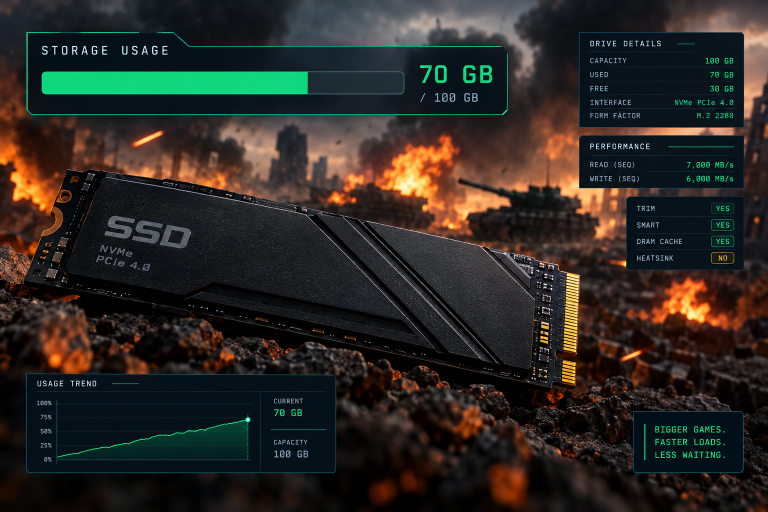
- File and download sizes: install footprint on each platform, including day-one patches and high-resolution texture packs where they apply.
- PC system requirements: minimum and recommended specs as published, plus what those specs actually mean for common hardware.
- Crossplay and cross-progression: which platforms can play together, whether saves and purchases carry over, and any account linking you need to do first.
- Release dates and unlock times: launch dates by region and the exact unlock hour in major time zones, including early access windows for premium editions.
- Age ratings: ESRB, PEGI, and other regional ratings with the content descriptors behind them.
- Player counts: local and online limits, co-op and competitive modes, split-screen support.
- Prices and subscriptions: standard and special editions, regional pricing, and whether a game is included in services like Game Pass or PlayStation Plus.
How pages are built
Each game page follows the same structure so you never have to hunt. The direct answer sits at the top. Below it, a breakdown by platform: PC, PlayStation, Xbox, Nintendo Switch, and mobile where relevant. If a game behaves differently on one platform, that difference is called out rather than averaged away.
Numbers come from publisher and platform listings, store pages, and official support documentation. Where a figure is an estimate rather than a published spec, such as completion time, we say so and explain how it was derived.
Games change after launch. Patches grow install sizes, crossplay gets added, prices drop, subscriptions rotate titles in and out. When something changes, the page changes with it.
Tools
Two tools are in development alongside the reference pages.
Can I run it takes your CPU, GPU, and RAM and compares them against a game’s published requirements. The goal is a plain verdict: meets minimum, meets recommended, or falls short, and on which component.
Release countdowns show the time remaining until a game unlocks in your local time zone, accounting for staggered regional launches and early access periods.
Both are being built now and will expand as the site grows.
Voice and standards
We write in a neutral, precise voice. No hype, no hedging. If a game’s store listing says 85 GB and the installed size is 92 GB after the day-one patch, we report both and explain the gap.
We do not pad answers. A question about player count gets a number, not three paragraphs about the history of the series.
Where a fact cannot be confirmed, we leave it out rather than guess. A page with a gap is more useful than a page with a wrong figure.
Independence
Metadata Games is not affiliated with, sponsored by, or endorsed by any publisher, developer, platform holder, or storefront. Nobody pays for placement, and coverage is not influenced by who makes a game or where it sells.
The site is new. Coverage is growing title by title, with priority given to major releases and games people search for most. If a game you are looking for is missing, it is a matter of it not being added yet rather than a decision to exclude it.
Corrections
Game data goes stale fast and listings sometimes disagree with each other. If you spot a figure that is wrong or out of date, we want to know. Corrections are checked against the current official source and applied to the page.